What is a capacitive sensor, and how does it work?
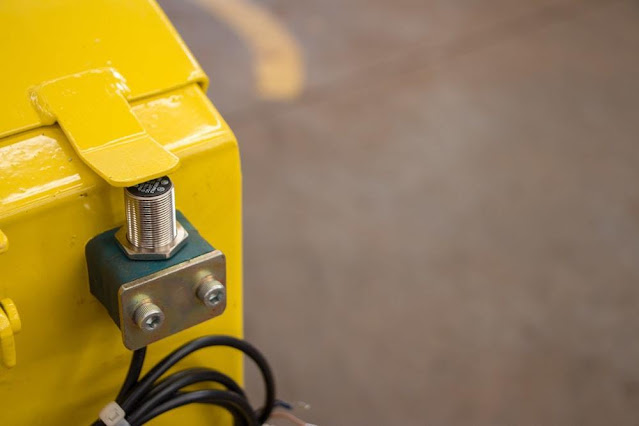
A capacitive sensor is a proximity sensor that detects adjacent objects by measuring their effect on the sensor's electrical field. Simple capacitive sensors have been commercially available for several years and have found a niche in the detection of nonmetallic objects, although they are limited to small ranges, often less than 1 cm. In their capacity to identify conductive materials while seeing through insulating materials like wood or plastic, capacitive sensor is akin to radar. In practise, the distinctions are significant. Capacitive sensors have the following advantages over radar: Because they're simpler, they're likely to be smaller, less expensive, and less power-hungry. Instead of range sensors, proximity sensors are used. They do not provide a direct indication of the detected object's distance. What is it capable of detecting? The capacitive sensor measures some capacitance from items in the environment that are constantly there and hence not interesting...