Posts

Showing posts with the label Healthcare IT

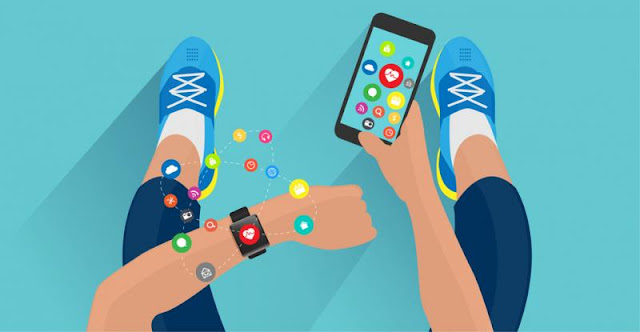
The Emergence of COVID-19 Has Increased the Popularity of Sports and Fitness Apps
Image
Sports and fitness apps have become an integral part of daily lives of millions of mobile users, allowing them to do everything related to both sports and fitness. Sports apps give users quick information related to their favorite sports leagues. Users can also watch live games for certain popular sports without a subscription, and they can receive updates on many other sports. These applications have made it possible to keep up with latest scores and news from of user’s favorite teams, as well as to stay informed about a favorite team or a player. While, the purpose of a fitness app is to provide the user with examples and instructions of one or more types of exercise, nutritional programs, physical activity, or some other fitness topic. The users can use sports and fitness apps to count calories, workout statistics, or to collect data about running, walking, and bike riding. Some sports and fitness apps also connect the user to a personal trainer or nutritionist to help them with a...


Internet of Things (IoT) Healthcare; Revolutionized the Way the Healthcare Industry Works Now

Image
Internet of Things (IoT) healthcare refers to a myriad of procedures designed to advance the ecosystem of the healthcare industry. IoT healthcare has made remote monitoring possible, unleashing the potential to keep patients safe and healthy, and empowering doctors to deliver excellent care. IoT-enabled devices also increased both patient satisfaction and engagement as interactions with physicians have become easier and more efficient. IoT devices with sensors are used to track real time location of medical equipment such as defibrillators, wheelchairs, oxygen pumps, nebulizers, and other monitoring equipment. IoT provides better quality care to the patient by simplifying the experience of healthcare. Moreover, Internet of Things (IoT) healthcare also has a major impact on reducing healthcare costs and improving treatment outcomes. Furthermore, remotely connected medical devices, like cardiac monitoring device, insulin pumps, and continuous positive airway pressure (CPAP) machines p...

Smart Cards in Healthcare; Maintain Efficiency of Patient Care and Privacy Safeguards

Image
  Smart cards in healthcare are small plastic cards with an embedded integrated circuit (IC) chip. These integrated chips store, manage, analyze, and process data and can also hold important information.  Smart cards are paper or digital versions of clinical information, such as vaccination history or test results. Smart health cards can either be printed on paper or digital. Smart cards can provide personal identification, authentication, data storage, and application processing. IC chips make the smart card suitable for different electronic applications. These chips are used to store, calculate, manage, and access personal data or information when needed. Thus, smart cards are widely used in a wide variety of health care services. Smart cards in healthcare perform encrypted algorithms and are safe compared to magnetic strip cards. Smart cards store and manage vital information such as finances, personal health information, and more. Moreover, in healthcare, smart cards are r...